
How to Schedule Twitter Posts and Scale Your Outreach
Learn how to schedule Twitter posts to save time, increase engagement, and grow your SaaS. This guide covers the best tools and strategies for founders.
As a founder, your time is gold. Manually posting on X every day? That’s a massive time sink. The smart move is to schedule your posts. This simple shift turns your account from a daily chore into a proactive engine for growth, lead generation, and scaling your SaaS distribution.
Why You Should Schedule Posts on X for Growth

Sure, the most obvious win from scheduling is saving time. We all get that. But for a founder, this is about more than just clawing back a few minutes. Scheduling is a strategic play. It builds a reliable distribution channel for your SaaS and turns your X account into a predictable lead generation machine.
Think about it. When you’re buried in product development, jumping on customer calls, and trying to fundraise, what’s the first thing to slip? Usually, it's social media. Inconsistent posting makes your brand look disorganized. Scheduling solves this problem flat out. It guarantees your content pipeline never runs dry, keeping a steady flow of valuable posts going out even when you’re completely slammed.
Maintain a Consistent Brand Voice
Your brand's voice is everything when it comes to building trust. Scheduling lets you create content in batches when you’re in the zone and thinking clearly. This means every post perfectly reflects your company's tone and message. No more rushed, off-brand thoughts tapped out between meetings.
This kind of consistency is how you build authority and attract the right followers—the ones who could become customers because they connect with what you have to say. It’s about being deliberate with every single piece of content.
"Think of scheduling not as 'set it and forget it,' but as 'plan it and perfect it.' It gives you the space to be strategic about your messaging instead of just being reactive to the clock."
Hit a Global Audience
Your ideal customers aren't all living in your time zone. If you’re only posting during your 9-to-5, you’re flat-out ignoring huge chunks of your potential audience. Scheduling posts lets you connect with people in different regions by dropping content right in their peak engagement windows.
This one tactic can dramatically expand your reach and ensure your best content lands when your audience is most likely to see it. It’s a low-effort way to get more eyeballs on your work and start conversations with leads from all over the world.
Ultimately, scheduling is your first step toward outreach automation. When you publish content consistently, you create engagement—likes, replies, shares. This is where your content strategy can plug directly into your outreach. For instance, a tool like DMpro can automatically engage with people who interact with your scheduled posts, turning that warm interest into a real sales conversation.
Your First Scheduled Posts Using X’s Own Tools
Before you dive into paid scheduling platforms, let's start with what you can do for free right inside of X. Getting your first few posts scheduled is surprisingly simple, and it's the perfect way to build a consistent content rhythm without any extra overhead. Think of it as laying the foundation before you bring in the heavy machinery.
The most straightforward method is using the scheduler built directly into X. When you're composing a post on your desktop, look for the little calendar icon at the bottom of the compose window. That’s all you need. It might not be loaded with features, but for basic planning, it works like a charm.
Just click that icon, pick the date and time, and you're set. This is incredibly handy for lining up a few key announcements or ensuring your account stays active over a weekend while you’re trying to unplug.
Using the Native Scheduler
Once you've crafted your post, the actual scheduling part is a breeze. The best part? There’s zero setup involved, which is a huge plus when you’re already juggling a hundred other things as a founder.
Here’s what that scheduling interface looks like.
As you can see, it's just a clean, no-fuss calendar. You pick the month, day, and time, hit confirm, and you're done. To see everything you've got lined up, just click "Unsent Posts" in the composer. This gives you a quick visual of your content pipeline for the next few days.
When You Need a Bit More Firepower
The native scheduler is perfect for one-off posts. But what happens when you’re managing both your personal brand and your SaaS company’s account? That's where X Pro (which you probably remember as TweetDeck) comes in. It's also free and, crucially, lets you wrangle multiple accounts from one clean dashboard.
X Pro is your first real step toward a more organized workflow. You can set up columns for each account, see your scheduled posts side-by-side, and manage interactions without constantly logging in and out.
Think of it this way: the native scheduler is like setting a single alarm. X Pro is more like a mission control center for your basic X operations. You can schedule content across different accounts and see your entire upcoming schedule at a glance, which is a game-changer for maintaining a consistent voice on multiple fronts—a key part of building authority and attracting those inbound leads.
Now, while these tools are great for getting the content out there, the real magic happens when you connect that content to your outreach. Once your scheduled posts start getting likes and replies, a tool like DMpro can step in to automatically engage those users with a personalized message, turning passive likes into genuine conversations.
Finding the Best Times to Schedule Your Tweets
Posting on X without a clear sense of timing is like holding a product demo in an empty room. You’ve done all the work, but no one is there to see it. Scheduling your content isn't just about being consistent; it’s about hitting your audience right when they’re scrolling and ready to engage. This simple shift can be the difference between a tweet getting a few lonely likes and one that sparks a real conversation with a potential lead.
Let's be realistic: with over 500 million tweets flying out every day, your message can disappear in an instant. This is where strategic scheduling becomes your secret weapon, helping you cut through the noise. The data is clear—posting during peak engagement hours gives your content a massive visibility boost.
Beyond Generic Time Slots
Instead of blindly following a generic "best times to post" list, let's think about the why behind those times. For a B2B SaaS company, posting midweek in the morning just makes sense. Your audience—other founders, marketers, and decision-makers—are at their desks, sipping coffee and catching up on industry news. They're already in a business mindset, which makes them far more receptive to content that can help them solve a problem.
Weekends? That's a whole different vibe. People are more relaxed, so your content should be too. It’s the perfect time for sharing behind-the-scenes glimpses of your startup journey or posing broader questions. Getting in sync with this natural rhythm is what makes your scheduled content feel timely and authentic, not like it came from a robot.
This infographic lays out the straightforward tools you have at your disposal for scheduling.
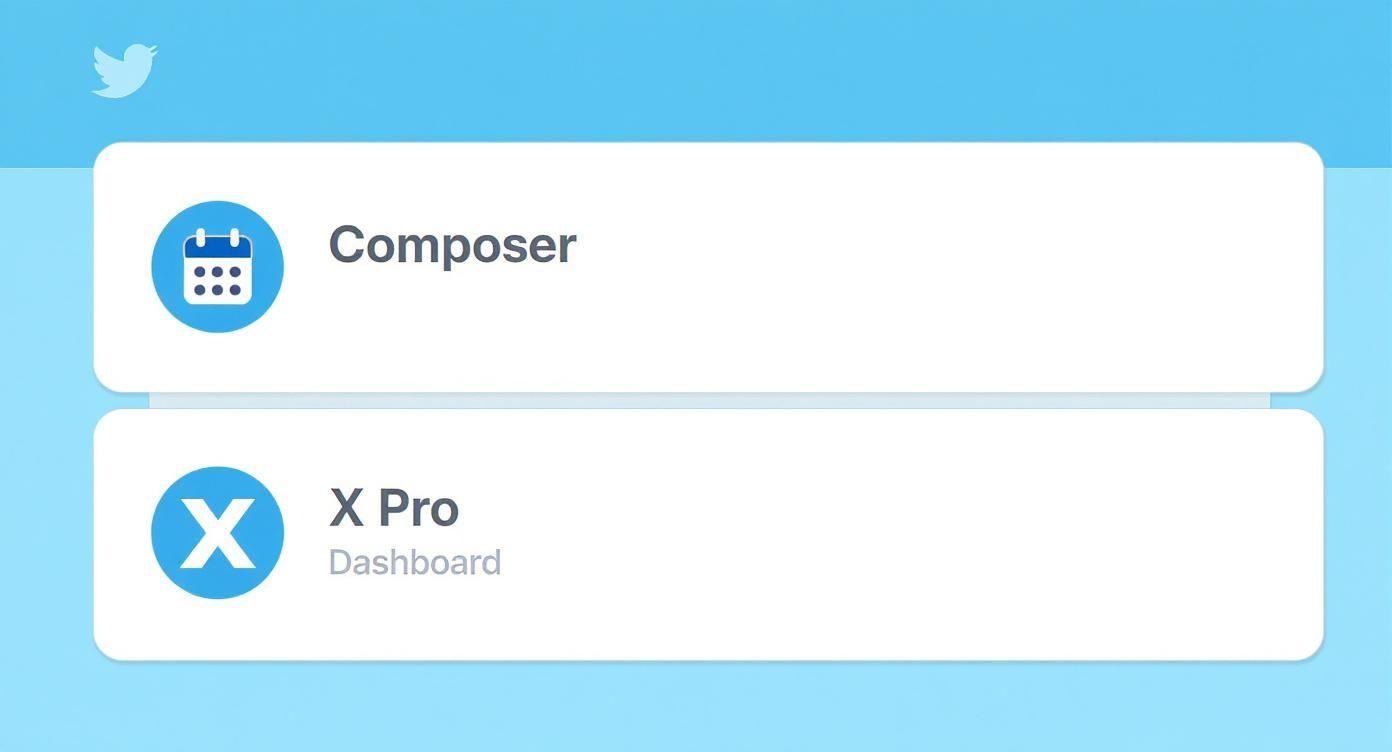
Whether you’re using the simple native post composer or the more advanced X Pro (formerly TweetDeck), you have everything you need to start targeting these key engagement windows.
To get you started, here's a look at some of the most effective posting windows I've seen for B2B SaaS companies.
Optimal Twitter Posting Times for B2B SaaS
| Day of the Week | Peak Engagement Window (PST) | Content Focus |
|---|---|---|
| Monday | 11:00 AM - 1:00 PM | Motivation, weekly goals, industry news |
| Tuesday | 9:00 AM - 12:30 PM | How-to guides, quick tips, case studies |
| Wednesday | 9:00 AM - 12:30 PM | Product features, webinars, deeper insights |
| Thursday | 9:00 AM - 12:30 PM | Thought leadership, data, industry trends |
| Friday | 9:00 AM - 11:00 AM | Success stories, team culture, weekend Q&A |
These times are a great starting point, but they're not the final word. The next step is to make this data work specifically for you.
Finding Your Unique Peak Times
While general data gives you a solid foundation, your audience is unique. The real magic happens when you dig into your own analytics to find your specific peak engagement times. This is where tracking post-performance stops being a "nice-to-have" and becomes an essential part of your growth strategy.
Your own data will always be more valuable than a generic industry report. Start with the recommended times, but be ready to pivot based on what your analytics tell you.
Start looking for patterns. Are your Tuesday morning posts always doing better than your Thursday afternoon ones? Do quick-tip threads get more traction during lunchtime? Answering these questions helps you fine-tune your schedule for maximum impact.
This is how you stop guessing and start building a predictable lead funnel. By diving into your analytics and reporting, you can ensure every single scheduled tweet has the best possible chance to connect with a future customer.
Level Up Your Workflow with Third-Party Schedulers
X's built-in tools are a decent place to start, but let's be real—you'll outgrow them quickly. If you're serious about making X a reliable channel for lead generation, you need a workflow that can keep up. This is where third-party schedulers come in, transforming your content process from a daily chore into a scalable system.
These tools are designed to fix the exact problems founders run into. Think about all the time you sink into filling your content calendar one tweet at a time. A good scheduler helps you get past that. You can upload and schedule an entire month's worth of content from a simple spreadsheet, saving you hours of mind-numbing work. That's time you can now spend on your product or talking to customers.
Go Beyond Basic Scheduling
The real advantage of these platforms isn't just picking a date and time. It's about building a smarter content engine. Tools like Buffer or SocialBee let you create content categories—maybe "Founder Insights," "Product Updates," or "Quick Tips"—and then assign a posting schedule to each one. This automatically ensures you're sharing a balanced mix of content without you having to manually plan it all out.
Another game-changer is the evergreen content library. You can build a queue of your all-time best posts, and the tool will automatically re-share them for you over time. This keeps your highest-value content in front of new audiences, driving consistent traffic and engagement without you lifting a finger. It's a simple, powerful way to get more mileage out of the content you’ve already put the work into creating.
Your goal should be to build a system, not just a schedule. Third-party tools give you the building blocks to create a content machine that runs on its own, so you can focus on high-leverage activities.
Choosing the Right Tool for Your SaaS
When you start comparing options, it's easy to get lost in a long list of features. As a founder, you should focus on what really matters: ease of use, scalability, and cost.
- Buffer: Known for its super clean interface and simplicity. It's a fantastic choice if you want a no-fuss tool to get content scheduled and analyzed without a steep learning curve.
- SocialBee: This one offers more advanced automation, like the content categories and evergreen recycling I mentioned. It’s perfect if you’re ready to build a more complex, self-sustaining content system.
These tools also give you much deeper analytics. While X’s native analytics are okay, third-party dashboards make it far easier to see what’s working at a glance. We know from comprehensive studies that timing is critical, with midweek mornings like Wednesdays at 9 AM often showing the highest engagement. Third-party tools help you pinpoint these optimal windows for your specific audience, making sure your content lands with maximum impact. You can learn more about how timing impacts engagement and see the data for yourself.
Managing accounts for both your personal brand and your company is another area where these tools are a lifesaver. Instead of constantly logging in and out, you can run everything from one dashboard. For founders trying to scale their presence, this integrated approach is non-negotiable. The ability to handle multi-account management for Twitter efficiently is a massive time-saver.
Ultimately, scheduling your content is just the first step. The real magic happens when you connect this top-of-funnel activity to your outreach. Once your scheduled posts start attracting attention, a tool like DMpro.ai can step in to automatically engage with those interested users, turning warm likes and replies into direct sales conversations.
How to Build a Simple Content Calendar for Leads

On X, consistency always wins. If you're just posting randomly whenever you have a spare minute, you're setting yourself up for burnout and getting zero results. A simple content calendar is your roadmap to turning those scheduled posts into a real, predictable lead generation channel. And it doesn't have to be complicated.
The goal here is to stop thinking tweet-by-tweet and start planning in themes. This shift lets you batch-create your content for weeks at a time, load up your scheduler, and free up your mind to actually build your product. This is how you create a sustainable system that builds your authority and brings in leads.
Mapping Content to Your Goals
Before you even think about writing a single post, you have to know why you're posting in the first place. Your content should be a healthy mix of different types, with each one doing a specific job. I like to think of it in terms of four core pillars.
- Valuable Insights: These are your quick tips, how-to guides, or breakdowns of complex topics in your niche. This is what builds your authority.
- The Startup Journey: Document your progress. Share the wins and the losses. Talk openly about what it's really like to build a business. This builds trust and human connection.
- Engaging Questions: Ask your audience about their challenges, opinions, or experiences. This starts conversations and gives you priceless market feedback.
- Product Promotion: Talk about how your product solves a specific problem. Frame it as the solution, not just a dry list of features.
This mix ensures you're not just constantly shouting "buy my stuff!" You're giving value, building real relationships, and then, when the time is right, you’re introducing your product to an audience that already trusts you.
Creating a Simple Posting Rhythm
Now, let's slot this into a weekly schedule. The secret is to assign a theme to each day. This completely removes that daily "Ugh, what do I post today?" feeling and makes creating content way more efficient.
For instance, your week could look something like this:
- Monday: A deep-dive thread on a key industry insight.
- Tuesday: A quick, actionable tip or a behind-the-scenes look at your startup.
- Wednesday: An engaging question to get your audience talking.
- Thursday: A case study or a spotlight on a specific product feature.
- Friday: A personal reflection on the week or a customer success story.
See how that structure lines up with engagement patterns? We know that midweek mornings are prime time for sharing your most valuable stuff. Planning your schedule around these windows gives your best content the visibility it deserves.
Pro Tip: Don't overcomplicate your tools. A simple Google Sheet with columns for Date, Time, Content Pillar, and the actual Tweet Copy is all you need to get started.
Once your scheduled posts start getting likes and replies, the next step is turning that engagement into actual conversations. This is where your content strategy can directly feed your outreach. For founders who are ready to scale, automating DMs to people who engage with your posts is a powerful way to bridge the gap between content and lead gen without spending all day in your DMs.
Putting Your X Scheduling on Autopilot
https://www.youtube.com/embed/bOUtqHFuvmQ
Okay, so you've got your posts scheduled. That's a huge first step, but honestly, it’s only half the battle. The real magic happens when you connect that consistent, top-of-funnel content with your actual outreach goals. Think of it as building a bridge from your feed directly to your sales pipeline.
By setting up a steady stream of scheduled content, you're creating a reliable flow of engaged followers. These are the folks who consistently like, reply, and share your stuff—they're basically raising their hands and showing interest. This is your cue to move beyond just broadcasting and start building a real, scalable system for generating leads.
Turning Engagement into Conversations
Instead of manually checking every single notification and trying to figure out who's worth a DM, you can use automation to turn that warm interest into a genuine conversation. A well-oiled content schedule is the fuel, but a smart outreach machine is the engine that actually drives growth.
This is exactly how you scale founder-led sales without spending your entire day glued to your DMs. Your scheduled content does the heavy lifting of attracting the right people. Then, an automated system can step in to make that first touchpoint for you.
The goal isn't just to post more; it's to create more opportunities for meaningful conversations. Your content schedule should be the first domino that tips over a series of automated outreach actions.
This whole approach lets you focus your precious time on building relationships with qualified leads who have already shown they're interested in what you have to say. You’re no longer just sending posts out into the void; you’re strategically using them to fill your pipeline.
Building a Scalable Outreach Machine
When you combine a solid content calendar with smart automation, you create a powerful flywheel. Here’s what that looks like in practice:
- You schedule content that speaks directly to your ideal customer's biggest headaches.
- Your content gets engagement from people who actually connect with your message.
- Automation tools step in to follow up with those engaged users, starting a conversation.
For example, you could set up a system where anyone who likes or replies to a specific post about a new feature gets an automated, personalized DM. This is a core function of powerful X automation platforms, which link your content directly to your lead generation efforts. A tool like DMpro can handle this entire workflow, sending out DMs based on how people interact with your scheduled posts.
This creates a seamless flow from top-of-funnel awareness right into a one-on-one sales conversation, all without you having to constantly babysit your account.
If you’re tired of manually sending DMs every day, try DMpro.ai — it automates outreach and replies while you sleep.
Got Questions About Scheduling on X?
Once you get a system going, a few common questions always seem to come up. I hear these all the time from founders who are just getting started with scheduling their posts on X, so let's clear them up right now.
How Many Times a Day Should I Actually Post?
There’s no magic number here, but a great starting point for most SaaS founders is scheduling 2-4 high-quality posts per day. The key is to prioritize value over sheer volume. Trust me, it’s much better to share two genuinely helpful posts than five generic ones that just add to the noise.
And don't sleep on threads. I always recommend scheduling at least two or three in-depth threads each week. They're incredible for sharing detailed knowledge and are absolute gold for cementing your authority in your niche.
Will Scheduling My Posts Hurt Engagement?
This is probably the biggest fear I see, but the short answer is no—not if you do it correctly. The X algorithm doesn't punish your content just because it came from a scheduler. Engagement only tanks when your scheduled content feels robotic or when you completely ghost the conversation that follows.
Here's the thing: scheduling isn't a "set it and forget it" trick. It’s a tool to help you publish better content at better times. You still have to show up. You still need to reply to comments and engage with others. Scheduling handles the logistics of publishing; you still own the conversation.
What's the Difference Between Scheduling and a Queue?
Great question. Getting the hang of this is where serious automation starts to happen.
- Scheduling is simple: you pick an exact date and time for a specific post to go live. It's a one-time thing.
- A Content Queue is different. It’s a feature you'll find in most third-party tools where you build a library of your evergreen content. You then create a posting schedule (like "post from my 'Founder Tips' category every Monday at 9 AM"), and the tool automatically grabs a post from that library to fill the slot.
A queue is a total game-changer for filling gaps in your content calendar and recycling your greatest hits without lifting a finger.
How Does This All Connect to Automating DMs?
Think of scheduling posts and automating DMs as two parts of the same outreach machine. You schedule posts to consistently grab attention and spark engagement at the top of your funnel. When someone likes, replies to, or shares your stuff, they're basically raising their hand and saying, "I'm interested."
That's the perfect moment for a tool like DMpro to jump in. It can automatically send a personalized DM to those exact users, turning a passive "like" into an active conversation. This is how you directly link your content strategy to actual lead generation, closing the loop between building an audience and building your business.
If you’re tired of manually sending DMs every day, try DMpro — it automates outreach and replies while you sleep.
Ready to Automate Your Twitter Outreach?
Start sending personalized DMs at scale and grow your business on autopilot.
Get Started Free