
How to Qualify Sales Leads and Stop Wasting Time
Learn how to qualify sales leads with a practical framework. Stop chasing bad fits and focus on deals that actually close for your SaaS.
Qualifying a sales lead is all about figuring out which prospects are most likely to actually buy from you. Think of it as a filtering system for your SaaS.
Instead of chasing a giant list of contacts, you’re methodically identifying the people who match your ideal customer profile, genuinely need what you're selling, and have the power and budget to make a decision. It's about working smarter, not harder.
Why Chasing Every Lead Is a Founder's Trap

As a founder, turning away potential business feels wrong. Your gut tells you to go after every single person who shows a tiny bit of interest, especially on platforms like Twitter.
But here’s a hard lesson I learned building my own SaaS: treating all leads the same is a direct path to burnout and stagnant growth.
This isn't just about losing time on dead-end calls. Your team's morale gets crushed by constant rejection. Worse, you're so tied up with low-quality prospects that you completely miss the high-value opportunities right in front of you. The old 'spray and pray' approach to outreach is dead.
The Real Cost of Unqualified Leads
Going after unqualified prospects isn’t just inefficient; it’s a massive drain on your resources. It’s no surprise that lead qualification is a huge challenge for most sales teams.
The data backs this up—only a tiny 15–25% of inbound leads are actually ready for a sales conversation.
This gets expensive fast. The average cost per lead can hit nearly $200, yet only 39% of companies have a consistent qualification process. Teams are burning cash on people who were never going to buy in the first place. You can dig into more of this data from Outreach.io.
"The goal isn't to get more leads. The goal is to get more qualified leads. The difference is the reason some founders scale while others just stay busy."
A solid qualification process isn't a luxury—it’s the engine that separates startups that scale from those that just spin their wheels. It’s about being deliberate with your most precious resource: time. By focusing on leads who are a perfect fit, you build a predictable growth machine.
Shifting from Quantity to Quality
With outreach automation tools everywhere, it's tempting to cast an even wider net. You can hit up thousands of people on Twitter with just a few clicks. But without a filter, you’re just making the problem bigger and scaling the noise.
This is where you need a fundamental mindset shift.
- Protect Your Team's Time: Every minute your team spends on a bad-fit lead is a minute they could have spent nurturing a future champion for your product.
- Improve Your Product Feedback: Qualified leads give you relevant, actionable feedback. Unqualified leads just create noise that can pull your product roadmap in the wrong direction.
- Increase Close Rates: When you focus on fewer, better leads, your conversion rates naturally go up, leading to a much healthier sales pipeline. You can learn more about what is a qualified lead and why it's so important.
This guide is your playbook for building that filter. We'll walk through, step-by-step, how to qualify sales leads and turn your outreach from a game of chance into a predictable system for growth.
Before You Qualify a Single Lead, Define Who You're Looking For
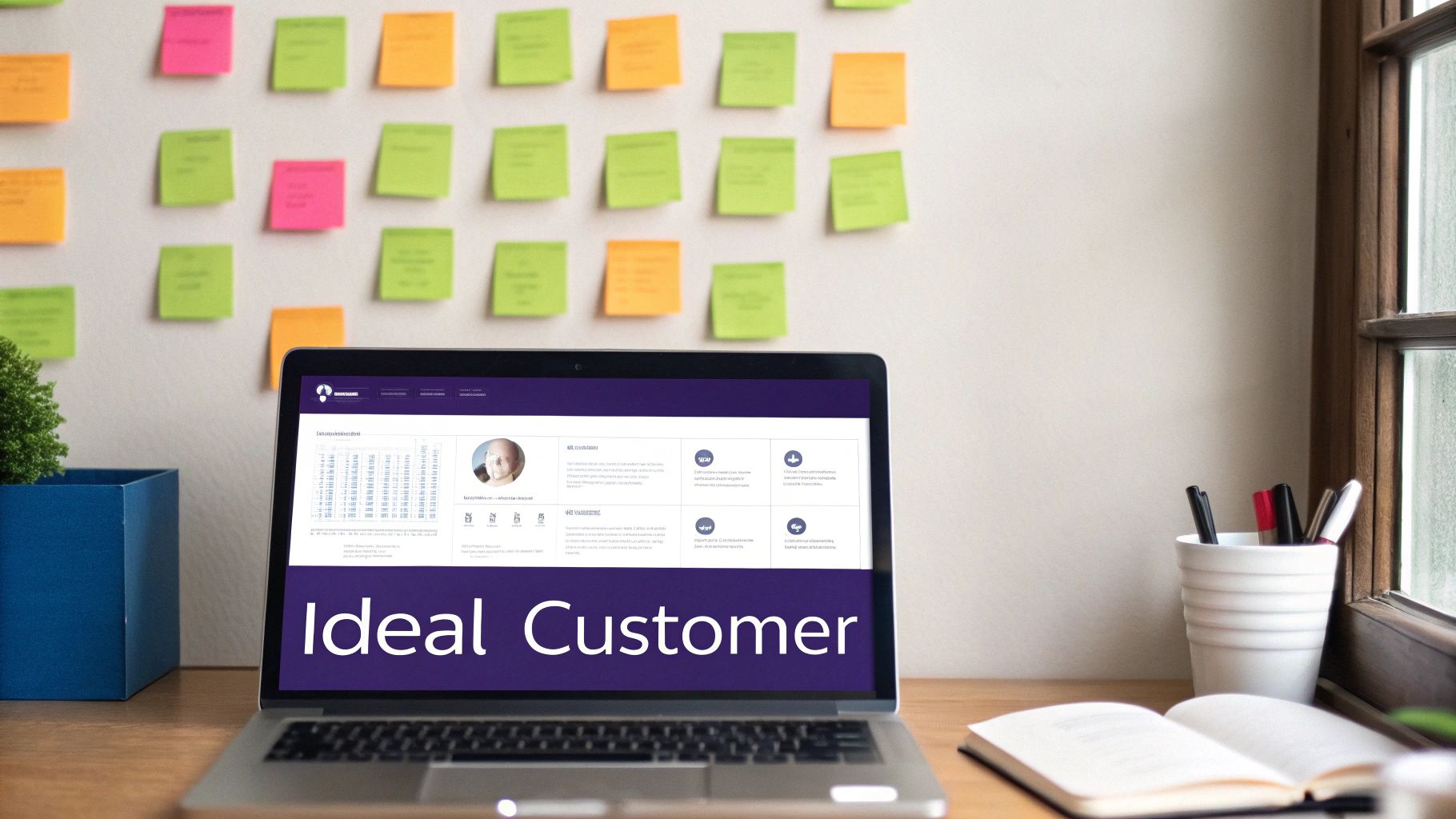
Before you even think about qualifying sales leads, you have to answer a more basic question: who are you actually trying to sell to?
Trying to qualify leads without a clear target is like trying to hit a bullseye in the dark. You'll just waste a ton of time on prospects who were never going to be a good fit.
This isn't about creating fluffy, generic "marketing personas." This is about building a razor-sharp Ideal Customer Profile (ICP). Your ICP is a living document that describes the exact type of company that gets the most value from your product and sticks around for the long haul.
Look at Your Best Customers First
The quickest path to defining your ideal future customer is to analyze your best current ones. Don't guess. Pull up your CRM or Stripe account and pinpoint your top 5-10 customers.
These are the champs—the ones who rarely complain, refer others, and have seen real results using your SaaS.
Now, it's time to get forensic. For each of these standout customers, dig into the details:
- Firmographics: What's their industry? How many employees? What's their approximate annual revenue?
- Technographics: What other tools are in their tech stack? This gives you massive clues about their workflow and budget.
- Pain Points: What specific, nagging problem were they trying to solve before they found you? Get as granular as you can here.
Once you lay all this data out, patterns will start to jump out. You might realize your best customers are all B2B SaaS companies with 20-50 employees that use HubSpot. That’s the seed of a powerful ICP.
The goal of an ICP isn't to exclude everyone. It's to give you a clear direction so you know exactly who to target your outreach towards, especially on crowded platforms like Twitter or LinkedIn.
Defining this profile is a cornerstone of your sales strategy. To make sure you're targeting the right prospects from the get-go, it’s worth implementing effective LinkedIn lead generation strategies that are perfectly aligned with your new ICP.
Turning Your ICP into a Qualification Framework
With a sharp ICP in hand, you can build a simple filter for all your incoming leads. This is where qualification frameworks are so useful—they give you a structured way to ask the right questions.
One of the oldest and simplest is BANT:
- Budget: Can they afford what you're selling?
- Authority: Are you talking to the decision-maker?
- Need: Do they have a real problem that your product solves?
- Timeline: Are they looking to buy now, or just kicking tires?
BANT is a great starting point, but don't feel locked into it. For many SaaS companies, a framework like CHAMP (Challenges, Authority, Money, Prioritization) works better because it leads with the customer's problems. The key is to create a set of objective criteria anyone on your team can use.
This whole process lets you start automating the initial filtering. For example, when running outreach campaigns on Twitter, you can set your ICP criteria (like "founder" or "head of sales") inside a tool like DMpro. The system then automatically finds and engages only those profiles, starting the qualification conversation for you.
Build a Simple and Effective Lead Scoring System
Alright, you know exactly who you want to talk to. Now, how do you figure out which of the hundred people in your pipeline are actually ready to have that conversation today?
That's where lead scoring comes in.
It sounds complicated, but it doesn't have to be. For a founder, a simple lead scoring system is one of the most powerful tools you can build. It’s the difference between guessing where to spend your time and knowing with confidence.
The Two Sides of a Lead Score
A solid lead score really just boils down to two things: who the person is and what they’re doing.
-
Demographic & Firmographic Fit: This is about how well a lead stacks up against your ICP. You assign points for things like their job title, company size, industry, or even the tech stack they use. A "Head of Growth" at a 50-person SaaS company? That’s a high score.
-
Behavioral & Engagement Data: This part is about their digital body language. What actions are they taking? Did they just visit your pricing page? Open your DM on Twitter and click the link? Each action signals a different level of intent.
The magic happens when you put these two pieces together. A lead who perfectly matches your ICP but has shown zero engagement is just a name on a list.
The leads you want to drop everything for are the ones who hit both criteria—the right person taking the right actions.
Creating Your SaaS Lead Scorecard
Building your own scorecard is really just about assigning points to the attributes and actions that actually matter to your business. Keep it dead simple. Start with a 100-point system and assign values based on what you’ve seen from your best customers.
Here’s a practical scorecard you can adapt for your own SaaS startup.
Sample Lead Scoring Scorecard for a SaaS Founder
This table gives you a straightforward way to assign points to different lead attributes and behaviors. It’s designed to be a starting point—feel free to adjust the criteria and points based on what signals you've found to be most valuable for your own business.
| Category | Criteria | Points |
|---|---|---|
| Demographic | Job Title (Founder, C-Level, VP) | +20 |
| Job Title (Manager, Director) | +10 | |
| Firmographic | Industry (Matches ICP) | +15 |
| Company Size (5-50 employees) | +15 | |
| Company Size (51-200 employees) | +10 | |
| Behavioral | Visited Pricing Page | +20 |
| Requested a Demo | +25 | |
| Opened a Twitter DM | +5 | |
| Replied to a Twitter DM | +15 |
Using a model like this, a founder at a 30-person SaaS company who requested a demo could easily rack up a high score, instantly flagging them as a top priority. No more guesswork.
The impact here is huge. Companies that get this right can boost their close rates by a staggering 30–70%. You can dig into more data-backed insights on how lead scoring impacts sales outcomes if you want to see the numbers for yourself.
From Scores to Actionable Tiers
Once you start scoring leads, the final piece of the puzzle is to group them into simple, actionable tiers. This keeps you from getting lost in the numbers and gives you a clear playbook.
Hot Leads (Score: 75-100): These are your VIPs. They perfectly match your ICP and are practically raising their hand to talk. They need immediate, personal follow-up.
Warm Leads (Score: 40-74): These leads are interesting but might need more time. They could be a great fit but aren't showing urgency yet. Drop them into a nurturing sequence.
Cold Leads (Score: 0-39): These leads just don't fit the bill. Don't waste your precious time here. Add them to a long-term, low-touch email list, but they shouldn't take up any of your active sales energy.
This simple tier system turns a messy list of contacts into an organized, prioritized pipeline.
Use Smart Automation to Qualify Leads Faster
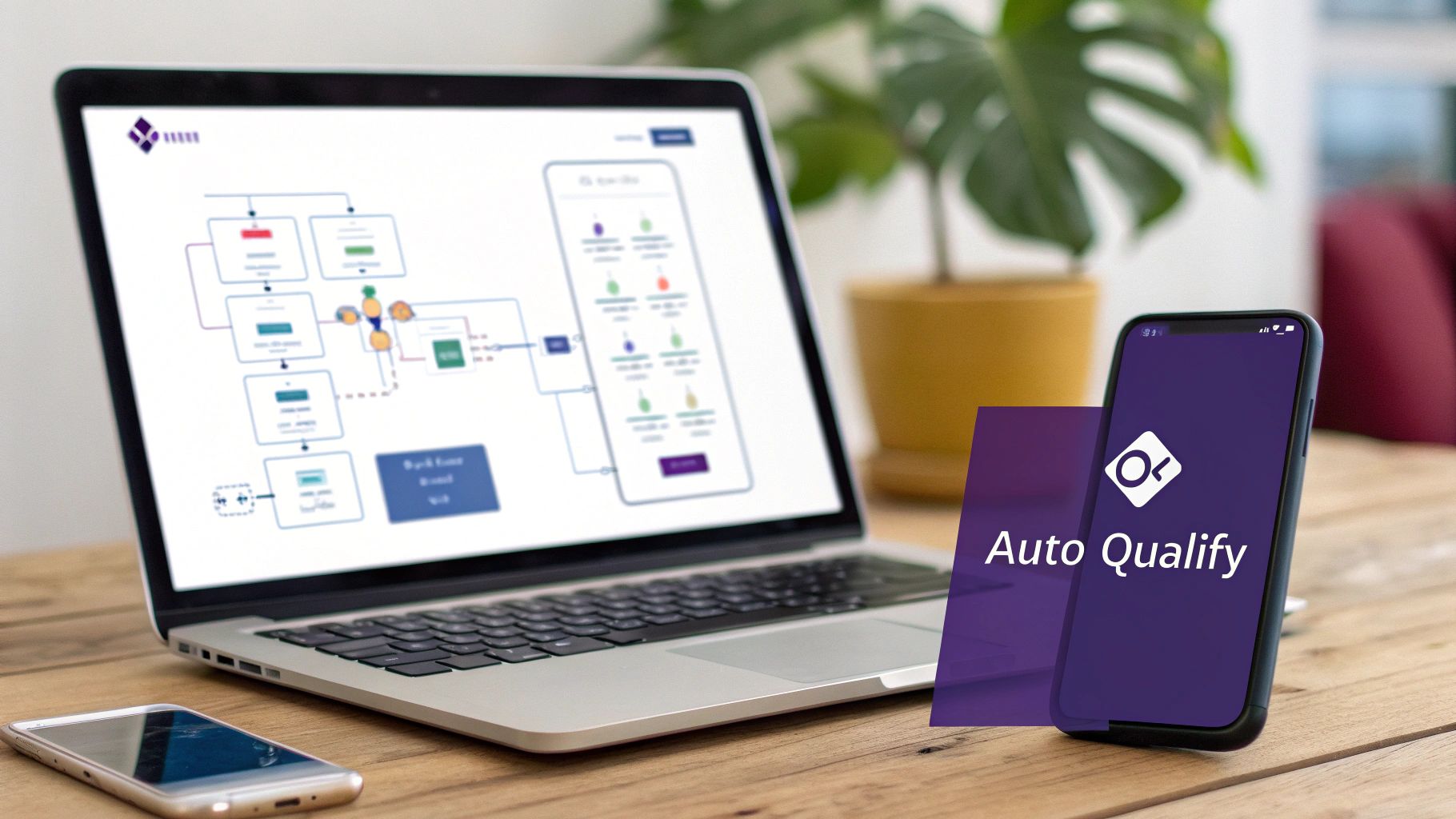
Let's be honest. Manually qualifying every single person who shows a flicker of interest is a huge time suck. It’s the biggest bottleneck that will stop you from scaling your sales efforts.
This is where smart automation comes in. It's not about replacing you; it's about giving you a serious advantage by handling the initial outreach and sifting, especially on fast-moving platforms like Twitter where speed is everything.
Designing Your Automated Qualification Machine
The goal is to build a system that automatically engages promising leads, asks a few key questions, and then hands the hot ones over to you for a real conversation.
So, where do you start? Think about the very first touchpoint. On Twitter, a perfect trigger is when someone new follows you. If their bio screams "your ideal customer"—maybe it says "SaaS Founder" or "Head of Growth"—an automated workflow can fire off instantly.
Instead of you manually checking every new follower, a tool like DMpro can do it for you. It scans their profile against your ICP criteria and immediately sends a personalized welcome DM. This isn't some generic "thanks for the follow." It's the start of a genuine conversation, scaled.
The secret is designing your automation around your ideal customer. You're not just automating tasks; you're automating the first step of what could be a high-value relationship.
This is where lead nurturing really shines. Research shows that companies who properly nurture their leads generate up to 50% more sales at a third less cost. That simple, timely, automated follow-up can make a world of difference.
Crafting Smart Discovery Questions for Automation
Your automated DMs should never feel robotic. The questions need to be light, conversational, and designed to gather just enough intel to see if they're a good fit.
Here’s a simple, effective sequence:
- The Opener: Start with something casual. "Hey [FirstName], saw you're into [Interest]. Great to connect! Noticed you're the founder at [Company]."
- The Problem Probe: Ask a broad question tied to a common pain point you solve. "Curious, how are you currently handling lead gen on Twitter?"
- The Solution Hint: Based on their answer, you can gently introduce what you do. "Got it. A lot of founders I talk to are struggling with that. We built a tool to help automate the whole process."
The responses you get are pure gold. If a lead writes back, "Yeah, it's a total grind, spending hours a day in DMs," they’ve just told you they have the exact problem you solve. That's a hot lead.
Building a Multi-Touch DM Sequence
The best part about automation? It never forgets to follow up. You can build a multi-touch sequence that keeps the conversation going without you lifting a finger.
For example, a tool like DMpro lets you map these sequences out visually. You can set up simple rules like, "If a new follower matches my ICP, send Message A. If they don't reply in 3 days, send Message B."
This is how you scale distribution. The system handles the initial qualification and nurturing. By the time a lead is flagged as "hot," they're already warmed up and ready for a real conversation. You can learn more by exploring powerful campaign automation to see how it works.
This systematic approach turns your lead qualification from a manual chore into an efficient, automated engine that feeds your pipeline with high-quality prospects 24/7.
Track Key Metrics and Avoid Common Pitfalls
Building a system to qualify leads is a great start, but it's nothing if you can't tell whether it's actually working. You have to track the right numbers and sidestep the common traps that snag so many founders.
A great qualification process isn't just a filter; it's a living system that you constantly improve. This means you have to measure, analyze, and refine.
The Few KPIs That Actually Matter
You can drown in data, so let's cut through the noise. For lead qualification, only a handful of key performance indicators (KPIs) tell the real story.
-
Lead-to-SQL Conversion Rate: This is your North Star. It answers the simple question: "What percentage of our leads are actually good enough to talk to?" A low rate could mean your lead sources are junk, or your ICP is off.
-
Average Time to Qualify: How long does it take for a lead to move from that first "hello" to being marked as qualified? On a platform like Twitter, speed is everything. If this number is creeping up, you’re losing momentum.
-
SQL-to-Close Rate: Here's the ultimate gut check. Of all the leads you thought were a great fit, how many actually became customers? If this is low, your qualification criteria are almost certainly too loose.
You don't need a fancy dashboard to track these. A simple spreadsheet will do when you're starting out. The key is consistency—check in weekly to spot trends before they turn into problems.
Common Mistakes Founders Make (And How to Fix Them)
It’s easy to either over-engineer your qualification process or make simple mistakes that sabotage the whole thing. Here’s what to watch out for.
1. Making Your Criteria Too Strict or Too Loose
This is a classic balancing act. If your criteria are too strict, you'll have a tiny pipeline and miss out on good opportunities. But if they're too loose, you'll flood your calendar with low-quality leads, defeating the whole purpose.
The Fix: Start with a tight ICP, but don't carve it in stone. Regularly review the deals you’ve lost and won. You might discover a new pattern of "good-fit" customers you hadn't considered.
2. Ignoring Behavioral Signals
So many founders get fixated on demographic data like job titles. That stuff is important, but what a lead does is often a more powerful signal than who they are. Someone repeatedly visiting your pricing page is a massive buying signal.
The Fix: Make sure your lead scoring gives a heavy weight to high-intent actions. Tools like DMpro are great for this because they can track engagement right within Twitter DMs—like opens, replies, and link clicks. This gives you a richer view of who is genuinely interested.
3. Forgetting to Review and Refine
Your market, your product, and your customers are always evolving. A qualification process that works today could be obsolete in six months. Treating your criteria as a "set it and forget it" task is a recipe for a leaky pipeline.
The Fix: Block off time on your calendar for a quarterly review. Dig into your KPIs and analyze your recent customer data. This is where you can lean on your analytics and reporting to see what's really driving results and what needs a tune-up.
Your Simple Lead Qualification Playbook
We’ve gone through the strategy, the tools, and the metrics. Now, let’s bring it all together into a straightforward playbook you can actually use.
This isn't just about tweaking another sales tactic; it's about building a core pillar for a scalable SaaS business. Getting this right means your time is spent on conversations that genuinely move the needle.
The Core Steps to Qualification Mastery
Here’s how to break it down into simple, repeatable actions:
-
Define Your ICP First: Before you do anything else, know exactly who you're selling to. Dig into your best existing customers and build a crystal-clear profile.
-
Build a Simple Scorecard: Assign points for key attributes. Think demographic fit (job title, company size) and behavioral signals (visited pricing, replied to a DM). This instantly shows you who's hot and who's not.
-
Automate the First Touch: Stop doing the manual grunt work. Use a tool like DMpro to kickstart conversations and handle the initial filtering on platforms like Twitter. This is how you scale your outreach without burning out.
-
Track What Matters: Zero in on the numbers that tell the real story: Lead-to-SQL Rate, Time to Qualify, and SQL-to-Close Rate. These KPIs will tell you if your process is actually working.
This is all about creating a continuous loop: you measure, you analyze, and you refine your approach based on real data.
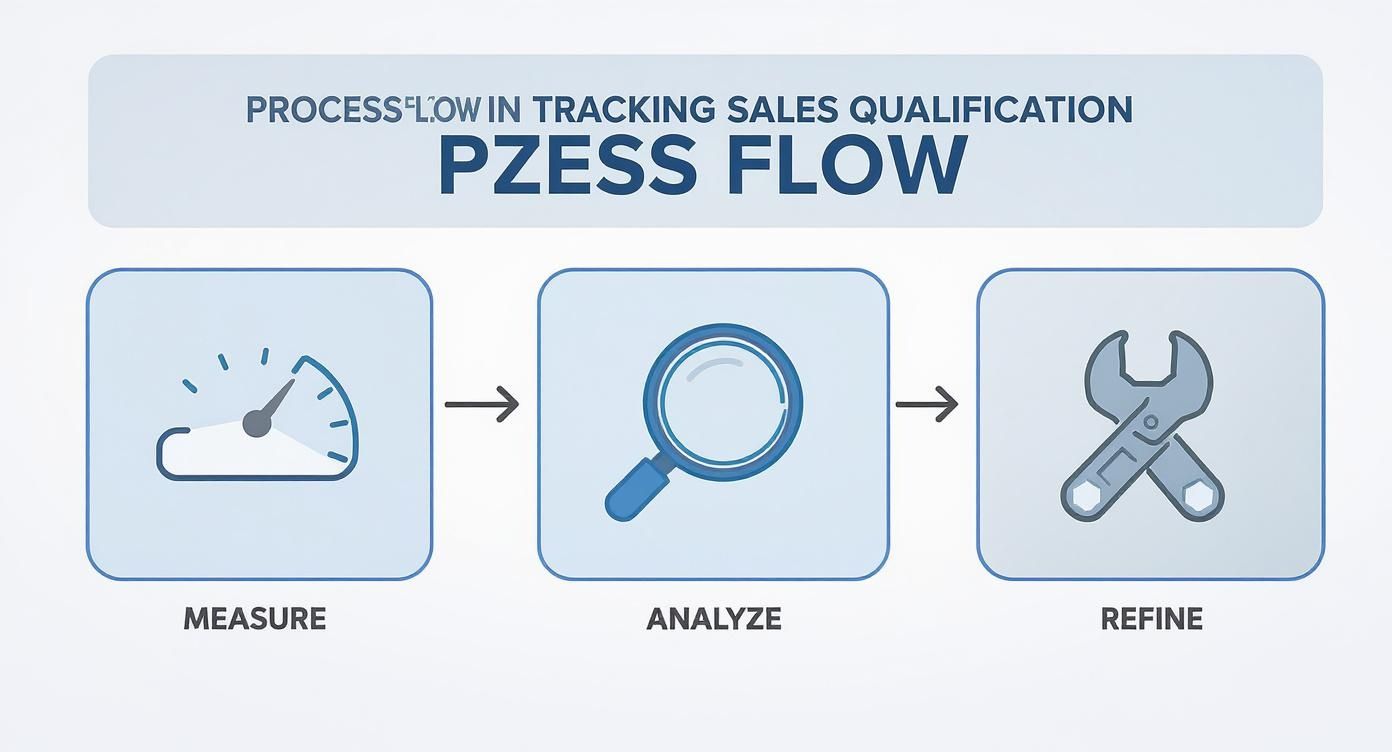
Remember, qualification isn't a "set it and forget it" task. It’s a cycle of constant improvement. For a deeper dive, check out these actionable strategies to qualify sales leads effectively.
Got Questions? I’ve Got Answers.
Here are a few of the most common questions that pop up when I talk to other founders about lead qualification.
How Often Should I Revisit My Qualification Criteria?
Think of your criteria as a living part of your sales process. I make it a point to review ours every quarter.
Why so often? Because things change. Your product gets new features, the market shifts, and your understanding of your ideal customer gets sharper. A quick quarterly check-in ensures you're always chasing the right leads for where your business is today.
What's the Single Biggest Mistake People Make on Twitter?
Easy. Treating every follower like a red-hot lead. Someone follows you, and your gut reaction is to slide into their DMs with a full-blown sales pitch. That’s the fastest way to get muted or blocked.
Instead, treat that first interaction as the start of a genuine conversation. Let outreach automation send the first message, but make it sound human. Something as simple as, "Hey, saw you're also in the SaaS space. What are you building?" works wonders. Be curious, not pushy.
How Do I Find the Right Balance Between Automation and a Personal Touch?
Here’s how I think about it: use automation for the grunt work. It’s perfect for the initial outreach, sending a follow-up, and flagging anyone who replies with interest. Its job is to sift through the noise.
The second a lead shows real intent—by asking a specific question or sharing a problem—that's your signal to jump in personally. A tool like DMpro can get the conversation started, but you need to be the one to close it.
Automation gets you to the 5-yard line; a human has to carry the ball into the end zone.
If you’re tired of manually sending DMs every day, try DMpro.ai — it automates outreach and replies while you sleep.
Ready to Automate Your Twitter Outreach?
Start sending personalized DMs at scale and grow your business on autopilot.
Get Started Free